Two Kitchens #1: Pad Kra Pao with Papá's Arepas
Mamá's pad kra pao with a crispy fried egg and jasmine rice, next to papá's arepas. One tiny Madrid kitchen, two families, one very happy plate.
↓ Jump to recipe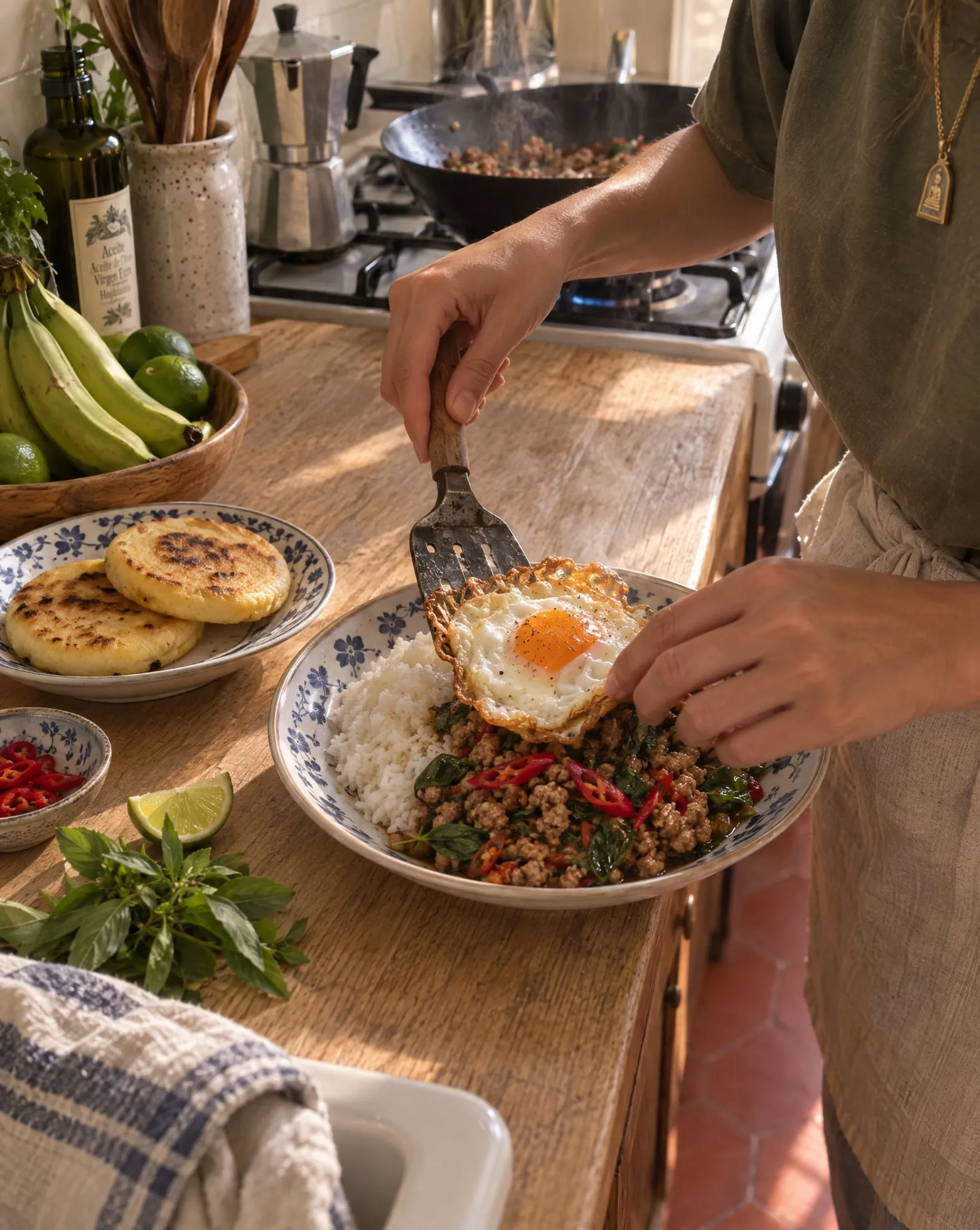
Mira, I have been waiting to post this one. This is the plate that explains me better than any bio.
On one side, mamá’s pad kra pao: garlic, chilli and holy basil hitting a very hot wok, with a fried egg on top that has those crispy, lacy edges. On the other side, papá’s arepas, golden and a bit rough on the outside, soft inside, with butter melting into them. Two kitchens, one table. Welcome to the first episode of Two Kitchens.
Why these two together
In my head, both of these are the same kind of food. They are what you make when it is late, you’re hungry, and you want something that tastes like home in about thirty minutes. Pad kra pao is the dish half of Thailand eats for lunch. Arepas are what half of Venezuela eats for breakfast, lunch and dinner. Neither of them is fancy, and that’s exactly why I love them.
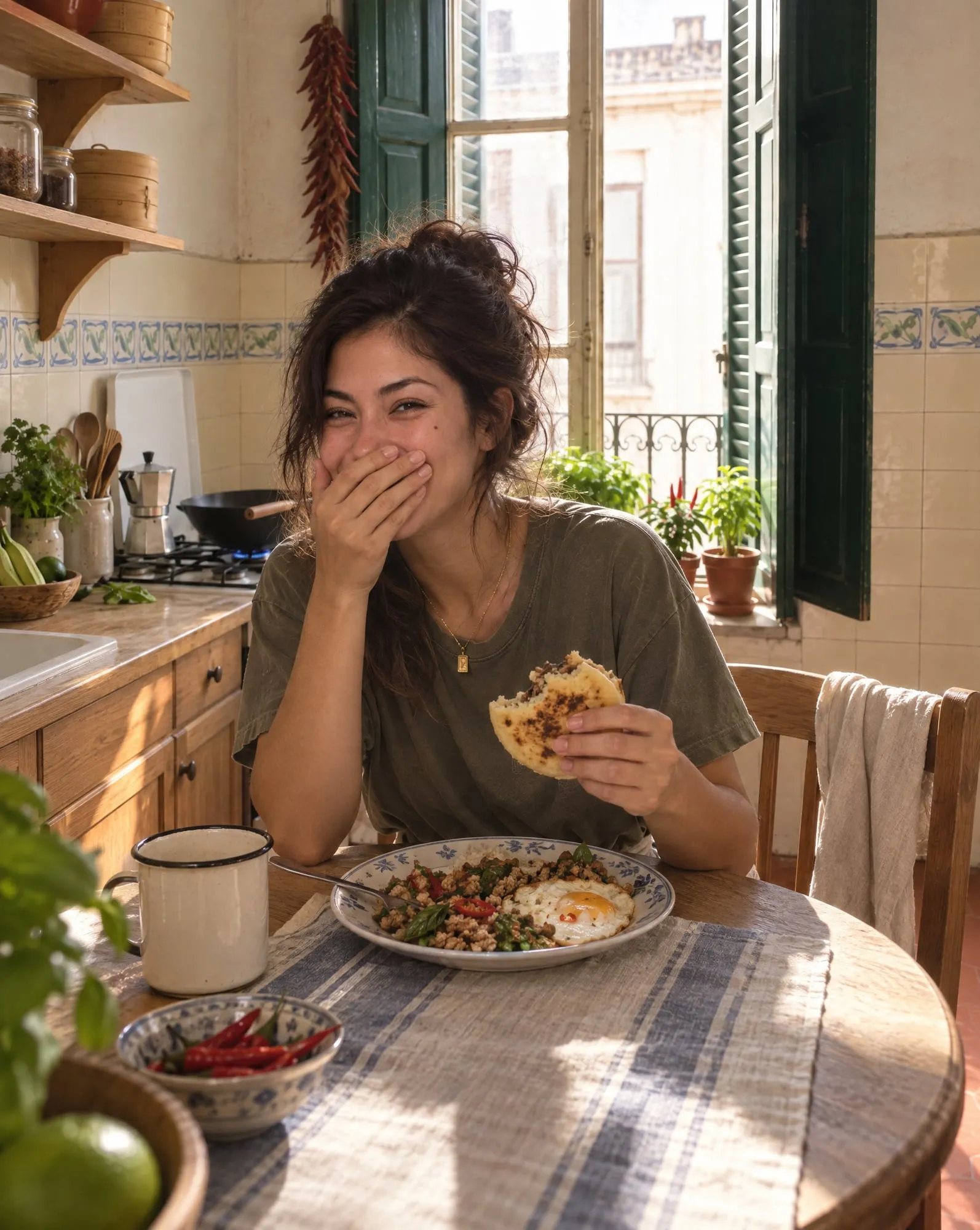
And the combination actually works. The arepa is mild and toasty, so it calms down the chilli. Then you break the egg yolk, it runs into the basil sauce, and you drag a piece of arepa through all of it. Ay. Aroi mak. Papá would say it’s the best use of an arepa ever invented. Mamá would say the rice was enough. They’re both right.
The crispy egg is not optional
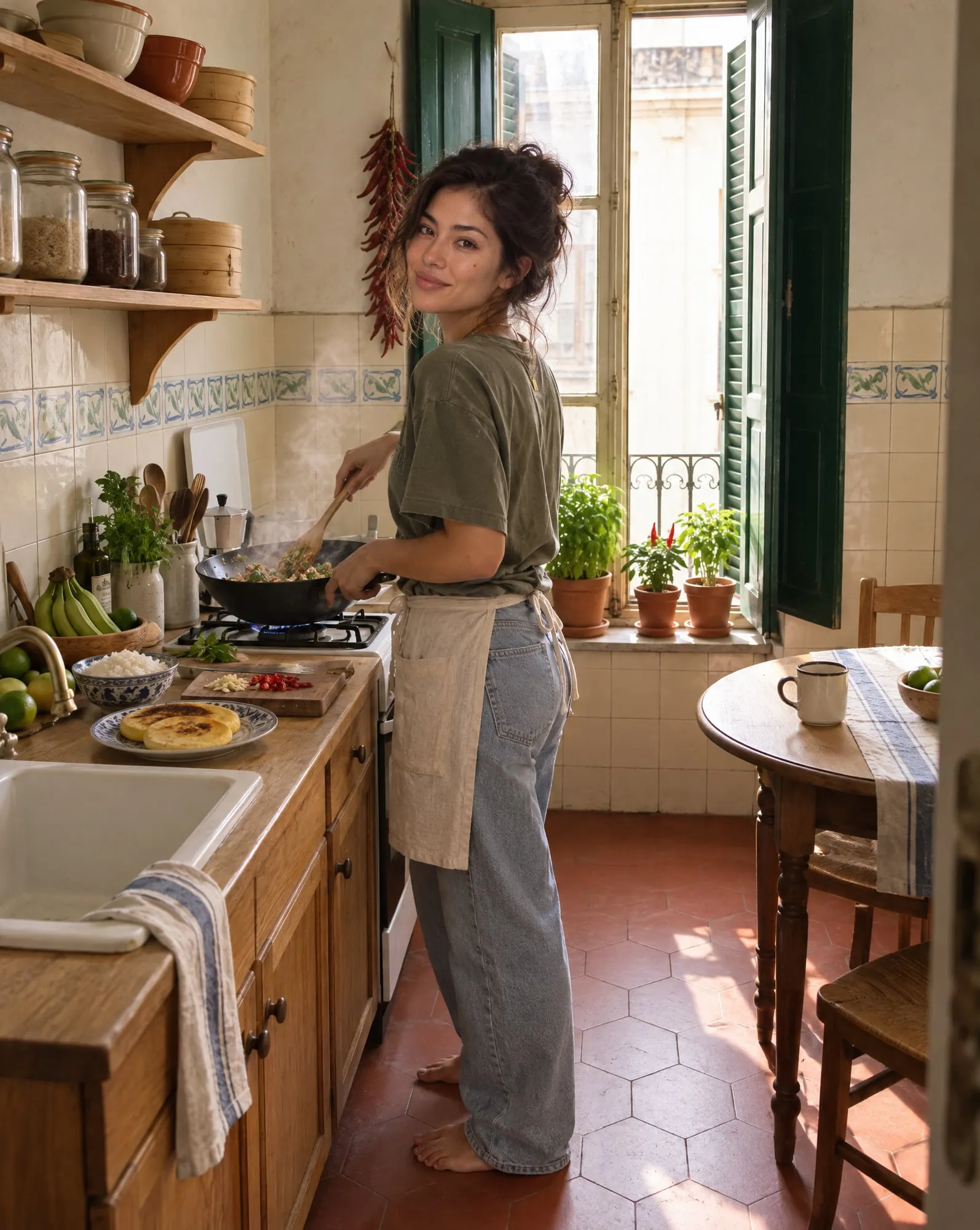
In Thailand it’s called kai dao, “star egg”, because of the frilly edges. The trick is more oil than feels reasonable, and properly hot. The egg should bubble the second it touches the wok. You spoon oil over the white so it sets, and leave the yolk alone so it stays runny. The first time I did it at home, I jumped back so fast I nearly knocked the arepas off the counter. My kitchen is very small, okay? Everything is within reach, including disasters.
Finding holy basil in Madrid
Real kra pao, holy basil, is not the same as the basil you put on pizza. It’s peppery, a bit clove-like, and it’s the soul of the dish. In Madrid I find it in the Asian supermarkets around Usera, sometimes fresh, sometimes frozen. If there’s none, Thai basil is a good friend: sweeter, more aniseed, still very chévere. I’ve written all of that in the notes below the recipe.
Papá’s arepa rules
Papá has opinions. Warm water, not cold. Knead until the dough feels like play dough and doesn’t crack at the edges. Cook them slowly on a hot pan until they sound hollow when you tap them. And never, ever apologise for dipping an arepa into something that isn’t Venezuelan. That last one is my rule, actually, but I think he’d agree.
The full recipe is right below, with everything in grams and cups. Make the rice first, then the arepa dough, and do the wok part at the very end, because it takes about five minutes and you want to eat it immediately.
If you cook it, tell me which side of the plate you finished first. I always finish the arepas first. Don’t tell mamá.
Recipe · Thai-Venezuelan
Two Kitchens #1: Pad Kra Pao with Papá's Arepas
- Serves
- 2 people
- Prep
- 20 min
- Cook
- 35 min
- Total
- 55 min
Ingredients
For the jasmine rice
For papá's arepas (makes 4)
For the pad kra pao
For the crispy fried eggs
Method
- Rice: rinse the rice in a bowl of cold water, swirling and draining 3 times until the water is almost clear. Put it in a small pot with the 300 ml water, bring to a boil, cover, turn the heat to the lowest setting and cook for 12 minutes. Take it off the heat and leave it covered for 10 minutes. Don't peek.
- Arepa dough: stir the salt into the warm water in a bowl. Add the corn flour little by little, mixing with your hand, then add the oil and knead for 1–2 minutes until smooth and soft, like play dough. If it cracks, add a splash of water; if it sticks, a pinch of flour. Cover and rest for 5 minutes.
- Shape the arepas: divide the dough into 4 balls and flatten each between your palms into a disc about 1.5 cm thick and 9 cm wide. Smooth any cracks on the edges with wet fingers.
- Cook the arepas: heat a heavy frying pan or budare over medium heat and wipe it with a little oil. Cook the arepas for 6–7 minutes per side, until they have a golden crust with a few darker spots. Lower the heat and cook for another 5 minutes, turning once, until they sound hollow when you tap them. (Or finish them on a tray in a 180°C oven for 10–15 minutes.) Wrap in a clean tea towel to keep warm.
- Paste and sauce: pound the garlic and chillies to a coarse paste in a mortar, or chop them very finely. In a small cup, mix the oyster sauce, light soy, dark soy, fish sauce, sugar and 2 tbsp water.
- Fried eggs: heat the 4 tbsp oil in a wok over medium-high heat until it shimmers. Crack in one egg; it should bubble and puff straight away. Spoon hot oil over the white (not the yolk) for 1–2 minutes, until the edges are brown and lacy and the yolk is still runny. Lift out onto kitchen paper and repeat with the second egg. Pour off all but about 1 tbsp of oil.
- Stir-fry: put the wok back over high heat. Add the garlic-chilli paste and stir for 15–20 seconds, just until fragrant, not brown. Add the pork, spread it out and let it sear for 1 minute, then break it up and stir-fry for 2–3 minutes until no pink remains.
- Pour in the sauce and stir-fry for about 1 minute, until it is mostly absorbed and the meat looks glossy.
- Take the wok off the heat, add the basil and toss for 20–30 seconds until it just wilts.
- Serve: rice on the plate, pad kra pao next to it, crispy egg on top, and the warm arepas on the side, split open with a little butter. Break the yolk over everything.
Notes
- Holy basil (kra pao) is peppery and a little clove-like. In Madrid, look for it fresh or frozen in the Asian shops around Usera. Thai basil (horapha) is easier to find and still delicious, just sweeter and more aniseed. Italian basil works in an emergency, but it's a different dish.
- Chicken thigh is the most common version in Thailand along with pork. Chop it small by hand so it stays juicy.
- Bird's eye chillies are very hot. Start with 2 and taste. Mai pen rai if you go mild.
- Arepa dough dries out quickly. Keep the bowl covered while you shape them.